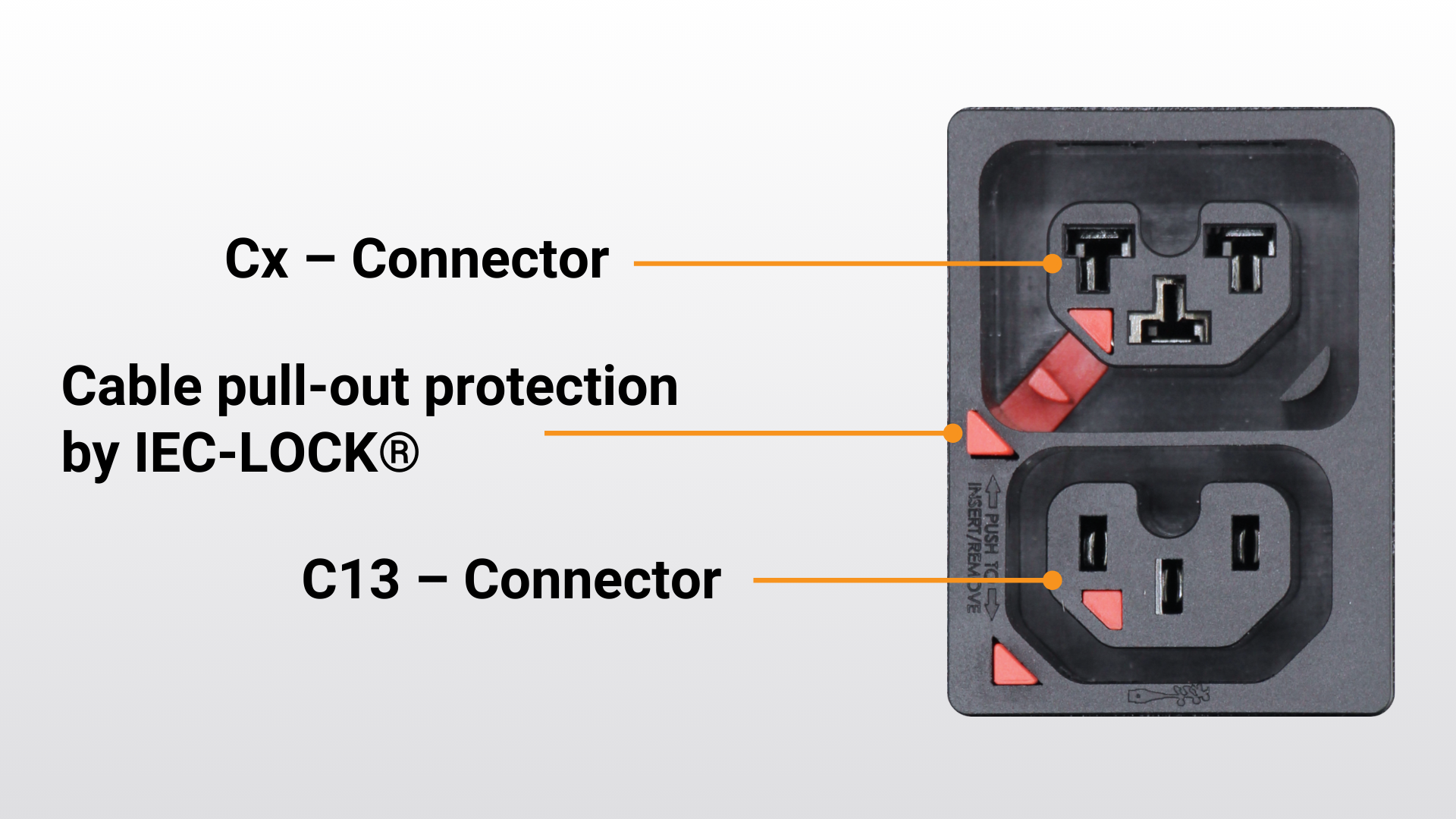
Different IEC connector types are often used in the rack – from C14/C16 for typical servers and switches to C20/C22 for more powerful systems. This has previously made the selection of a suitable PDU challenging, as different outlet types had to be taken into account.
With its Cx outlets, the new cXale SmartPDU supports all common IEC connector types in a single outlet format, simplifying the entire planning process. This means that the PDU always remains compatible and flexible, regardless of the current or future device environment.
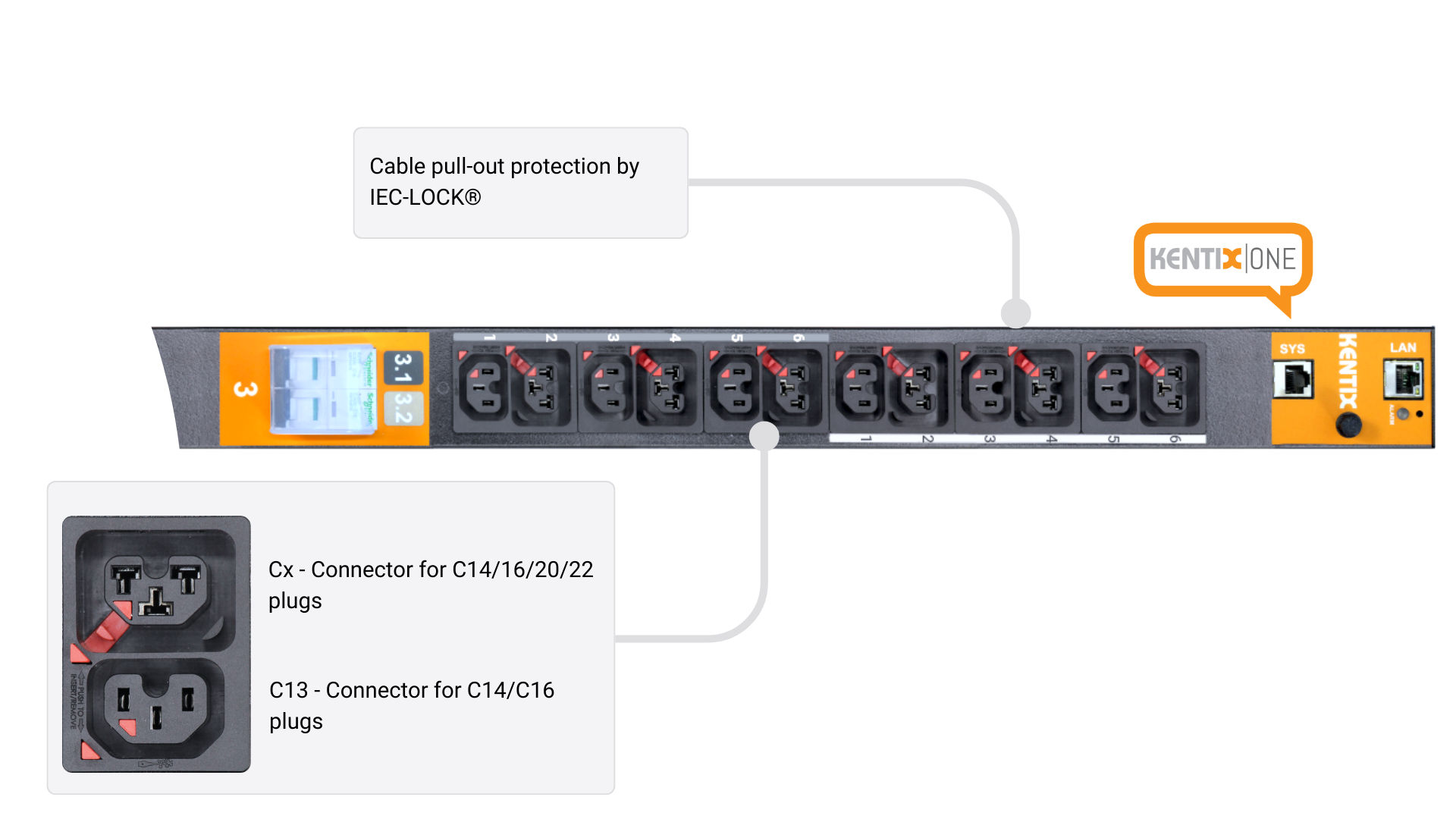
IEC LOCK: Protection against unintentional release
In addition to the choice of outlet types, the mechanical stability of the plug connection also plays a role. During server operation, electrical connections can become loose due to cable tension or servicing work and, in the worst case, lead to unplanned failures.
The cXale SmartPDU uses IEC LOCK connectors in accordance with IEC 60320 to reduce this risk. The locking mechanism effectively prevents cables from being unintentionally pulled out, for example when working on the rack or pulling on the cable.
Conclusion
With the cXale SmartPDU, power distribution in the rack remains flexible – regardless of which IEC connector types are currently required or will be required in the future. The new Cx outlets support all common IEC plugs (C14, C16, C20, C22) in a single outlet format, enabling the use of mixed or changing device environments without having to adapt the PDU.
SmartPDU – The central system component in the server rack
Today, a modern SmartPDU does much more than just distribute power. It becomes the central instance in the rack when it comes to transparency, security and planning future expansions. Our white paper shows what role a SmartPDU plays in this, how monitoring, protection and connection concepts can be sensibly bundled and which factors are decisive for a future-proof rack infrastructure.