


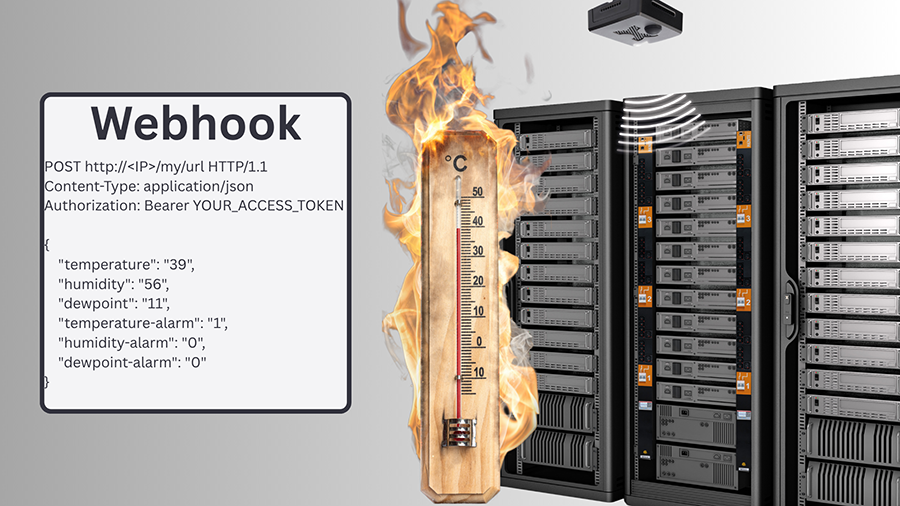
In modern IT and security infrastructures, the fast, automated transfer of information is of crucial importance. With webhooks, KentixONE offers a flexible solution for informing external systems in real time about events in the system without the need for manual intervention or regular API queries.
What are webhooks?
Webhooks are HTTP-based callback mechanisms that enable event-driven communication between KentixONE and external applications.As soon as an event occurs in the system – such as an alarm, an access or a status change – KentixONE automatically sends data to a defined web service.
In contrast to classic API queries (“pull” principle), where external systems have to request data regularly, webhooks work according to the “push” principle: the system transmits relevant information live and automatically as soon as an event occurs.
How webhooks work in KentixONE
Webhooks are configured and managed centrally in KentixONE. Only a few parameters are required for the setup:
- URL address of the external service as communication endpoint
- HTTP method for the type of interaction (query, send, change or delete data)
- Content type for classifying the data format of the user data
- The user data of the webhook to be transmitted
The content of the user data (“payload”) can be flexibly adapted using system variables. For example, alarm, user or device data can be transmitted individually.
Use as an event handler
A major advantage of webhooks in KentixONE is their direct integration into event handler structures. Once configured, webhooks can be integrated into alarm groups or sensors to trigger automated processes – e.g. in the event of an alarm or system status change.
Management takes place in a clear tabular view: New webhooks can be created and existing ones edited here. The webhooks can then be assigned to an event in the corresponding alarm group and sensor configurations.
Typical application examples
Webhooks open up a wide range of integration options, such as:
- Forwarding alarm messages to external monitoring or control center systems
- Integration into ticket or notification services to automatically generate support cases
- Automatic processing of sensor values in IoT, building or energy management platforms
This means that external systems are synchronized automatically and in real time without the need for additional administration.
Practical example: Door opening with webhook
A typical scenario for the use of webhooks is access control via KentixONE.As soon as a person holds their token to a DoorLock, the system checks in real time whether this person is authorized to open the door at that time.
Relevant data such as the token UID, the name of the user, the time of the access attempt and the authorization (permitted or denied) are automatically transmitted to an external service via the configured webhook.
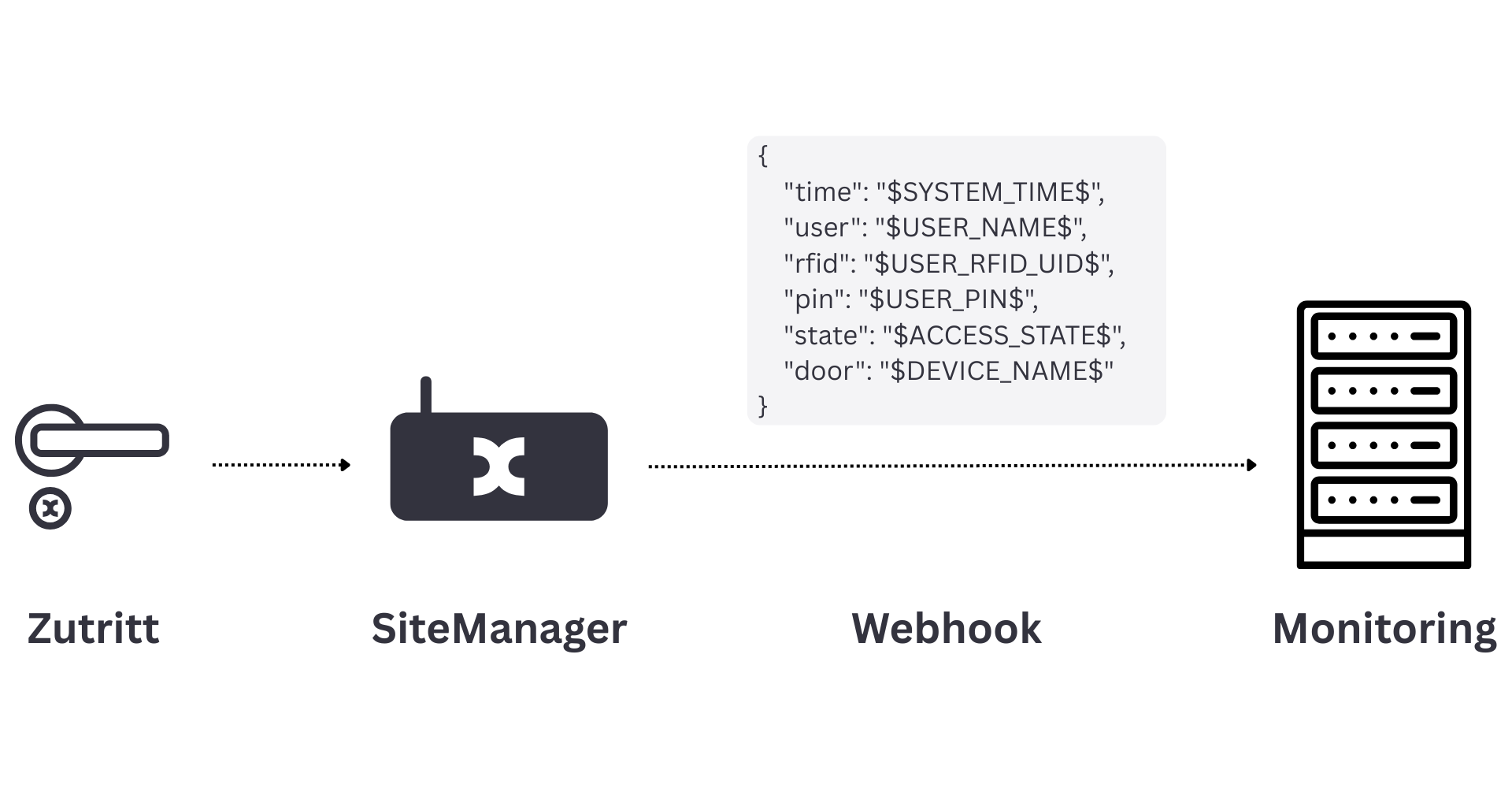
This service can then process the information further – for example to log access, to raise the alarm in the event of unauthorized attempts or to integrate it into a building management or ticket system.
Conclusion
With the webhook integration in KentixONE, processes can be automated, simplified and linked in real time. Whether for alarm forwarding, data integration or system monitoring – in addition to the API, webhooks are another powerful tool for seamlessly connecting KentixONE with external applications and making the digital infrastructure even more efficient.
